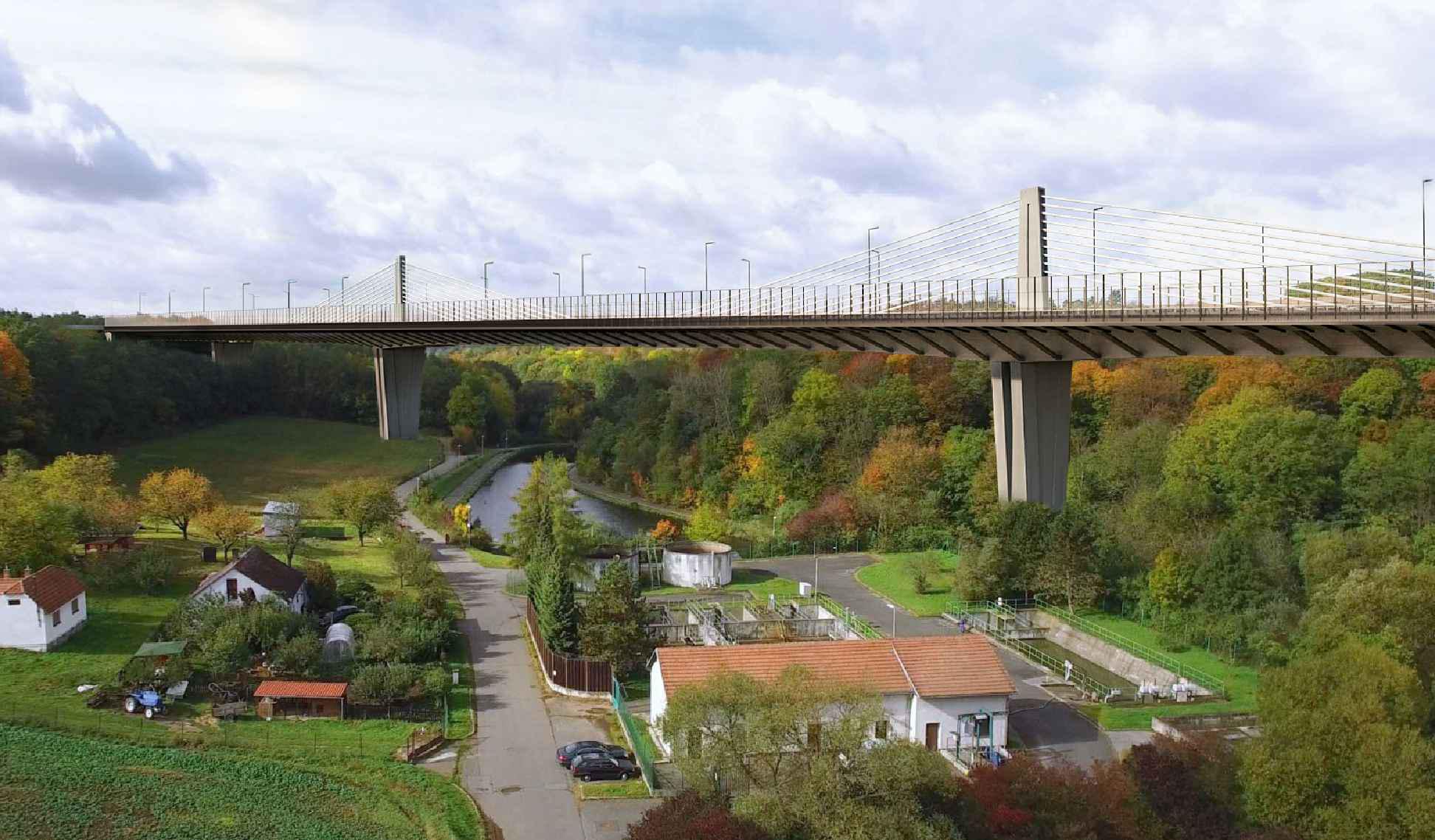
We have achieved success in the architectural competition organised by the Road and Motorway Directorate for the design of a bridge over the Drahaň Valley on the D0 Suchdol–Březiněves section. Our competition entry placed third among leading Czech and international teams.
The aim of the design was to create a resilient bridge that would also fit sensitively into the landscape of the Drahaň Valley, which forms part of the Drahaň–Troja Nature Park. This approach is reflected both in the chosen structural system and in the proposed construction method.
A Resilient Bridge Structure with Respect for Nature
The 546-metre-long bridge is designed as a prestressed concrete extradosed bridge. This makes it possible to span the main 170-metre span using just two low pylons, each 17 metres high. As a result, the bridge has a significantly lower visual impact on the surrounding landscape than conventional cable-stayed bridges.
Only four piers are proposed across the entire valley profile, none of which interfere with the stream, the wastewater treatment plant sedimentation basin or the adjacent roads. Most of the bridge is designed to be constructed using the balanced cantilever method, which minimises intervention in the terrain beneath the bridge and reduces the environmental impact of construction.
The bridge also includes separate pedestrian and cycle paths, which connect to the surrounding routes at both ends via steel footbridges. To protect path users from traffic noise, 5-metre-high noise barriers are planned along both sides of the bridge. Their specially designed transparent panels will minimise the risk of bird collisions while also limiting the passage of birds and bats in the immediate vicinity of the roadway.
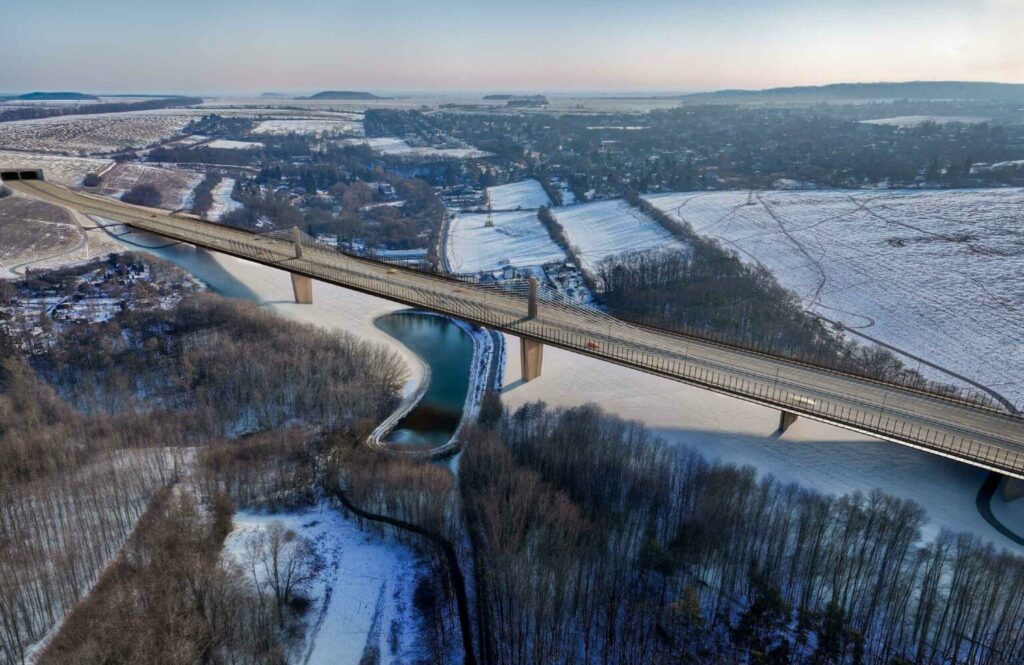
Visualisation of the bridge design over the Drahaň Valley by the SAGASTA team
The Jury Praised the Structural Design
The competition jury particularly praised the extradosed structural solution, the harmonious arrangement of the stays, the positioning of the piers away from structures at the bottom of the valley, and the functional design of the pedestrian and cycling connections. The jury also positively evaluated the technical feasibility of the proposal, its expected service life and the construction method, which minimises intervention in the central part of the valley.
At the same time, we received several valuable recommendations for further development of the design. The jury highlighted, in particular, possible modifications to the design of the inclined struts and their anchoring, with regard to the transfer of forces into the prestressing cables.
Being ranked among the three best designs in this prestigious competition is a significant achievement for us. It also confirms our long-standing experience in designing bridges that are both technically and architecturally well considered while respecting the surrounding landscape.